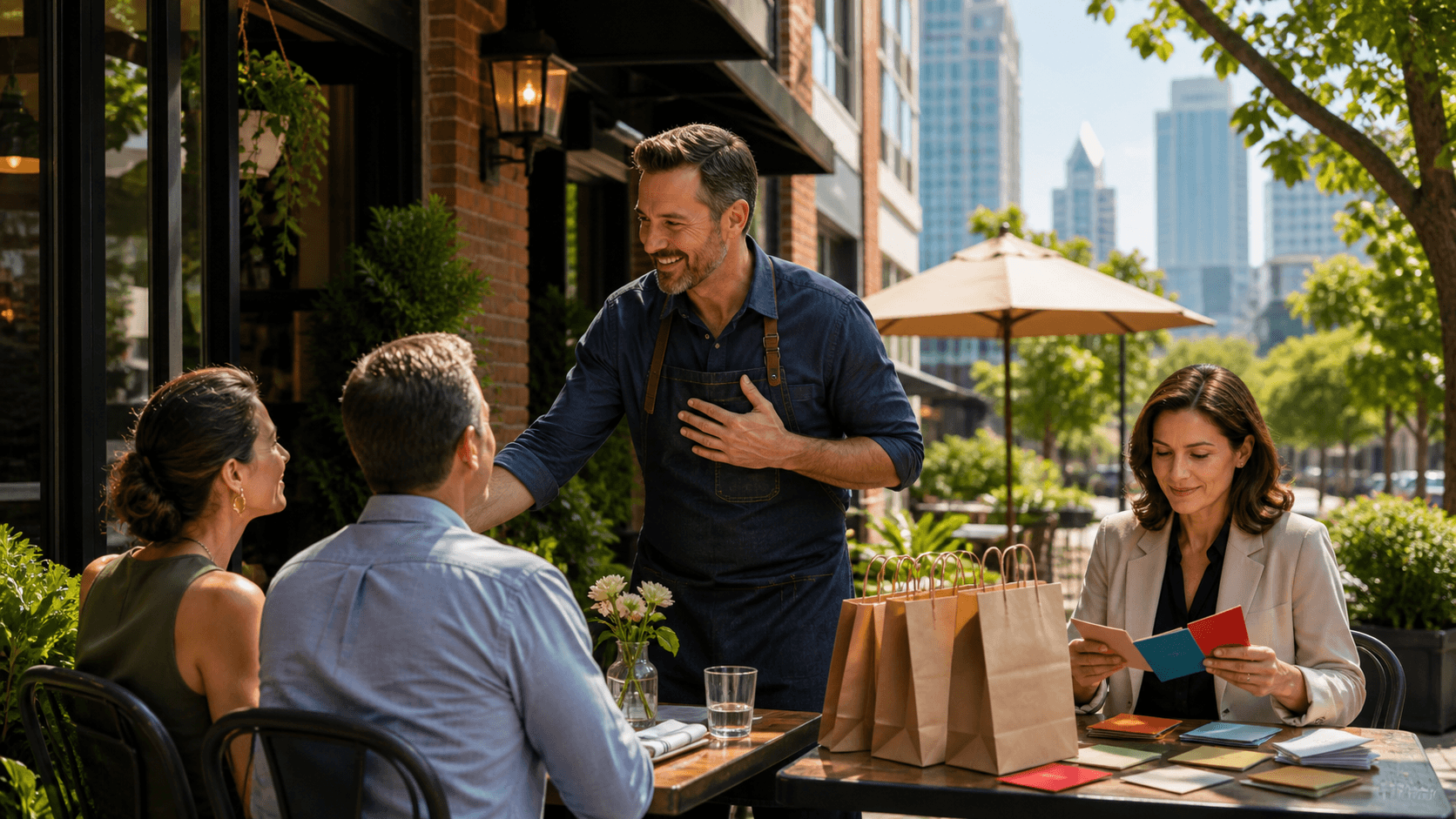
Restaurant Marketing in Charlotte: Building Repeat Visits
A restaurant's first visit should begin the next campaign, not end the acquisition effort. A full dining room is a good start, but repeat visits are what help create steadier restaurant revenue. Restaurants should plan for the guest's next visit before the first check is paid, using a clear offer and a consistent experience from mailbox to table.
Charlotte diners have plenty of choices across neighborhoods, suburbs, and nearby Fort Mill. Restaurant marketing in Charlotte should do more than fill seats for one promotion. It should make your restaurant easier to remember, reinforce what makes it special, and give guests a simple reason to come back.
Turn First-Time Diners Into Regulars
Getting someone through the door once takes effort. Keeping your restaurant top of mind after they leave takes a plan. A guest may enjoy a meal, but without a reminder or a reason to return, the next dinner, lunch, or catering order can easily go somewhere else.
That is why restaurants should plan the full guest experience. The first impression might come from a direct mail piece, a Google search, a social post, or a recommendation from a friend. The follow-up could be a loyalty offer, a receipt message, a takeout bag insert, or an invitation to an upcoming event. Each touchpoint should feel like it belongs to the same restaurant and lead naturally toward the next visit.
A coordinated campaign can include direct mail, loyalty offers, seasonal promotions, local partnerships, and useful promotional products. The goal is not to flood guests with messages. It is to stay visible in ways that feel timely and worthwhile, with a clear plan for what happens after a first-time diner responds.
Build a Return Plan Before You Promote
Before designing a postcard or printing a table tent, choose one clear business goal. "More customers" is too broad to guide a campaign. A focused objective gives your offer, audience, and tracking method a job to do.
Your priority may be to:
- Increase weekday lunch traffic
- Bring back guests who have not visited in 60 to 90 days
- Grow catering orders from nearby offices
- Fill private event dates or holiday gatherings
- Encourage frequent weekend guests to visit at quieter times
Available POS, reservation, online ordering, and loyalty data can help you identify the guest groups that matter most. A family-focused restaurant may want to reach households close to its location. A lunch-focused concept may want to focus on office workers and business parks. Guests who order often but have stopped visiting may need a different message than people who have never tried your restaurant.
The offer should match the behavior you want. A weekday lunch promotion might focus on convenience and timing. A holiday catering campaign should make booking simple and create a clear deadline. For existing guests, a reward or exclusive experience may work better than the same new-guest discount offered to everyone.
Measurement belongs in the plan from the beginning. Use one primary response method, such as a unique promo code, QR code, dedicated landing page, loyalty scan, or offer-specific phone number. That way, you can connect the campaign to real return visits instead of relying on guesses.
Use Direct Mail to Reach Nearby Diners
Direct mail gives restaurants a tangible way to reach the people most likely to visit. Unlike a message that disappears in a crowded feed, a well-designed mail piece can sit on a kitchen counter, office desk, or refrigerator until the right dining occasion comes along.
Audience selection matters. Restaurants can target nearby residential neighborhoods, use carrier-route saturation for broad local visibility, or mail to an existing customer list. The right approach depends on your goal. A family restaurant may prioritize nearby homes, while a restaurant built around lunch, takeout, or catering may focus on office-heavy areas.
A strong restaurant mail piece should include:
- Appetizing photography that reflects the experience you want guests to expect
- A clear offer with a simple deadline
- Easy-to-find location, ordering, or booking details
- Limited copy that gets to the point quickly
- A trackable response method, such as a QR code or promo code
The design should feel as considered as the meal and service. If your dining experience feels premium, the mail piece should not look like a rushed discount flyer. If your brand is casual and family-friendly, the message should feel warm, clear, and easy to act on.
For an autumn campaign, a restaurant could mail holiday catering information or a gift card offer in late October. Guests who redeem or book during the holiday period can then receive a timely reason to make their next visit after the seasonal occasion, such as a January return offer.
Make Every Guest Touchpoint Worth Remembering
One postcard alone rarely carries a whole campaign. The message becomes stronger when guests see the same offer and visual style at home, online, and inside the restaurant. Consistency helps people recognize your restaurant faster and understand what action you want them to take.
Consider aligning campaign materials across menu inserts, table tents, bag stuffers, receipts, email, social media, and updates to your Google Business Profile. A guest who receives a catering postcard should see the same message when they visit your profile, place an order, or dine in.
Promotional products can also keep your restaurant visible between visits when they have a real purpose. Branded insulated cups, reusable takeout bags, staff apparel, event giveaways, and catering leave-behinds can work well when the item is useful and the design fits your brand.
Not every return offer needs to be a percentage-off discount. Premium restaurants may protect their brand better with a chef event, wine dinner, priority loyalty access, or a value-added experience. The best offer feels like a natural extension of what guests already enjoy about your restaurant.
Turn Seasonal Traffic Into the Next Visit
Seasonal campaigns should include a plan for what happens after the occasion ends. Restaurants may be preparing for holiday catering, company lunches, private events, gift cards, family gatherings, and neighborhood celebrations. Clear booking deadlines and early capacity messaging can help guests make decisions before calendars fill up, while a follow-up offer gives seasonal guests a reason to return.
For example, a qualifying gift card purchase, catering order, or holiday event booking can include a January dining incentive. This gives customers a reason to think about your restaurant after travel, gatherings, and year-end spending have passed. The same approach can apply to any seasonal promotion: define the next visit you want to earn and build the follow-up into the original campaign.
Results should be reviewed by campaign source, offer type, guest segment, and return behavior. A campaign with fewer redemptions may still be more valuable if it brings back guests who order more often, book events, or become regulars. The point is to learn which messages create lasting customer relationships.
Put Your Next Repeat-Visit Campaign in Motion
A practical campaign calendar for the next 60 to 90 days can keep promotions from becoming last-minute decisions. Map out your holiday offer, direct mail timing, in-store materials, and follow-up message before the first piece goes out. Then make sure every channel supports the same goal.
Repeat visits are earned through clear offers, recognizable branding, and timely follow-up. Start with one measurable objective, build the message around the guest behavior you want to encourage, and use the results to make the next campaign stronger.
Make Your Next Campaign More Memorable
Nine19 helps restaurant owners turn practical campaign goals into mail, design, and promotional pieces guests notice. See how our approach to restaurant marketing in Charlotte can support a focused campaign built around your next business objective. We'll help you create a message that fits your brand and gives customers a clear reason to return.